
How to Match Outdoor Lighting to Your Home’s Architectural Style
Outdoor lighting does more than illuminate your property after sunset. It can bring out architectural details, create a welcoming entrance, and make your home feel more complete. The key is choosing lighting that complements your home’s design rather than competing with it.
For homeowners in Jacksonville and Northeast Florida, that means considering everything from the shape of your roofline to your exterior finishes, landscaping, and outdoor living spaces. A coastal-style home may call for relaxed, understated fixtures, while a Mediterranean home can benefit from lighting that emphasizes arches, columns, and textured walls.
Whether your home is coastal, traditional, Mediterranean, or contemporary, the right combination of fixtures and placement can create a cohesive look that feels intentional from the street to the backyard.
Coastal Homes: Keep The Look Relaxed And Inviting
Coastal architecture often features light-colored siding or stucco, wide porches, expansive windows, and a connection to outdoor living. Outdoor lighting should complement that relaxed atmosphere without making the exterior feel overly decorated.
Lantern-style fixtures, simple wall sconces, and understated pathway lights work well with coastal homes. Finishes such as matte black, brushed metal, and weathered brass can complement light exterior colors while adding definition around entryways and porches.
Placement matters, too. Consider lighting that frames the front door, illuminates porch columns, and guides visitors along walkways. Landscape lighting can also highlight ornamental grasses, palms, and other coastal-inspired plantings without overwhelming the yard.
In Jacksonville’s coastal communities, durability deserves special attention. Salt air, humidity, and frequent rain can affect exterior fixtures, particularly in properties closer to the water. Choose fixtures rated for their installation environment and designed to withstand local conditions.
The goal is a welcoming glow that feels natural to the architecture, not a collection of lights that draws attention away from it.
Traditional Homes: Emphasize Symmetry And Classic Detail
Traditional homes often feature balanced front elevations, defined entryways, decorative trim, brick or stone accents, and established landscaping. Outdoor lighting can reinforce these details by creating a sense of symmetry and continuity.
Classic lanterns, traditional wall sconces, and fixtures with subtle decorative elements can complement this architectural style. Bronze and black finishes often work well with brick, neutral siding, and darker exterior trim.
Start with the front entrance. Matching fixtures on either side of the door can emphasize symmetry, while appropriately placed lighting can highlight columns, covered porches, and architectural molding. If the home has a prominent garage or long front walkway, coordinating those areas with the entry lighting helps the entire exterior feel connected.
Landscape lighting provides another opportunity to complement traditional architecture. Use carefully positioned uplights to highlight mature trees, illuminate attractive planting beds, or draw attention to stone features. Pathway lights can define the route to the entrance while maintaining a consistent visual rhythm.
Avoid choosing fixtures that are too small for the scale of the home. A large facade or tall entryway may need more substantial lighting to maintain balanced proportions.
Mediterranean Homes: Highlight Texture, Arches, and Columns
Mediterranean-style homes are often recognized by stucco exteriors, terracotta roof tiles, arched windows and doorways, decorative ironwork, and warm earth-tone finishes. These features create opportunities for outdoor lighting that adds depth and dimension.
Rather than illuminating every wall evenly, focus on the details that give the home its character. Carefully positioned uplights can draw attention to columns and textured stucco, while subtle lighting around an arched entrance can establish a focal point.
Warm-toned lighting often complements cream stucco, natural stone, and terracotta finishes. Bronze or dark metal fixtures can also coordinate with wrought-iron railings, gates, and other decorative elements.
Courtyards, fountains, and garden areas deserve attention as well. A layered design can combine architectural lighting with illumination for trees, planting beds, and outdoor seating areas. This creates depth throughout the property without requiring every feature to be equally bright.
For Mediterranean homes, restraint is especially important. Too much light can flatten textured surfaces and make decorative details less noticeable. Thoughtful placement helps reveal the architecture while preserving the home’s warm, inviting character.
Contemporary Homes: Focus On Clean Lines And Subtle Effects
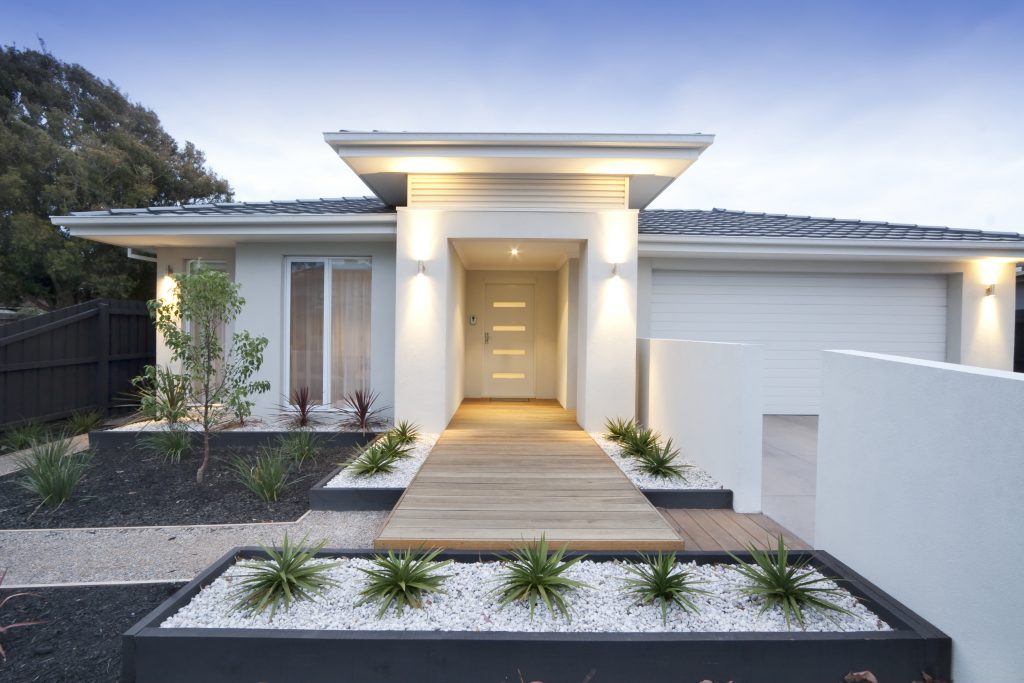
Contemporary homes often feature geometric shapes, large windows, minimalist details, and contrasting materials such as concrete, glass, wood, and metal. Outdoor lighting should complement those characteristics with a streamlined, uncluttered appearance.
Simple cylindrical sconces, linear fixtures, recessed lighting, and discreet landscape lights can reinforce clean architectural lines. Matte black and dark bronze are common options, while other finishes may work depending on the home’s exterior palette.
Placement is just as important as fixture selection. Up-and-down wall lights can emphasize vertical surfaces, while carefully aimed landscape lighting can highlight a modern facade, sculptural tree, or distinctive exterior material. Integrated step and pathway lighting can provide visibility without adding visual clutter.
Contemporary architecture also lends itself to layered lighting. Instead of relying on a few bright fixtures, combine subtle architectural illumination with targeted lighting for walkways, outdoor seating areas, and landscaping.
Smart lighting controls can make the system more flexible. Homeowners can adjust brightness, schedules, or colors where compatible fixtures and controls allow, creating different looks for everyday evenings and outdoor gatherings.
The objective is to let the architecture lead. Lighting should enhance the home’s lines and materials without distracting from them.
How To Create A Cohesive Look Across Your Property
Even when the right fixture style is clear, a successful outdoor lighting design requires more than matching finishes. The placement, brightness, and color of the light all influence how the property looks after dark.
Keep these principles in mind:
- Start with architectural priorities. Identify the features you want to emphasize, such as the entryway, columns, roofline, stonework, or mature trees.
- Think in layers. Combine architectural lighting, landscape accents, and practical illumination for entrances and walkways rather than relying on one type of fixture.
- Maintain consistent proportions. Choose fixtures that suit the scale of the home and position them where they support the overall design.
- Avoid excessive brightness. A carefully lit facade can make a stronger impression than one covered in harsh, uniform light.
- Consider the surrounding landscape. Trees and planting beds can frame the home, add depth, and connect the architecture to the rest of the property.
- Choose fixtures for local conditions. In Northeast Florida, outdoor fixtures need to be appropriate for humidity, rain, and, in coastal locations, salt exposure.
These ideas align with the layered approach discussed by Architectural Digest in its guide to creating a thoughtful outdoor lighting scheme. The emphasis is on highlighting important features, balancing visual appeal with safety, and avoiding unnecessarily harsh illumination.
For more ideas specific to your property’s exterior, explore Pro Lighting Outdoors’ guide to home exterior lighting in Jacksonville.
Let Your Home’s Architecture Guide The Design
The most effective outdoor lighting complements the home you already have. Coastal homes benefit from relaxed, durable fixtures. Traditional homes often look best with balanced placement and classic details. Mediterranean architecture calls for lighting that reveals texture and decorative features, while contemporary homes benefit from clean lines and subtle, layered effects.
The best solution also considers the surrounding trees, walkways, entryways, and outdoor living areas. When these elements work together, the result feels cohesive rather than pieced together.
Pro Lighting Outdoors designs and installs custom outdoor lighting for homeowners throughout Jacksonville, St. Augustine, Ponte Vedra Beach, Amelia Island, and surrounding Northeast Florida communities. Our team can help you identify your home’s defining features and create a lighting plan tailored to your architecture, landscape, and goals.
Explore our residential lighting options to see how thoughtful design can transform your property after dark, or contact Pro Lighting Outdoors to schedule a consultation and discuss a custom lighting design for your home.